How Does Synthetic Data Work in Machine Learning? Myths vs. Reality
Acutus Ai
February 3, 2026
Reading Time: null
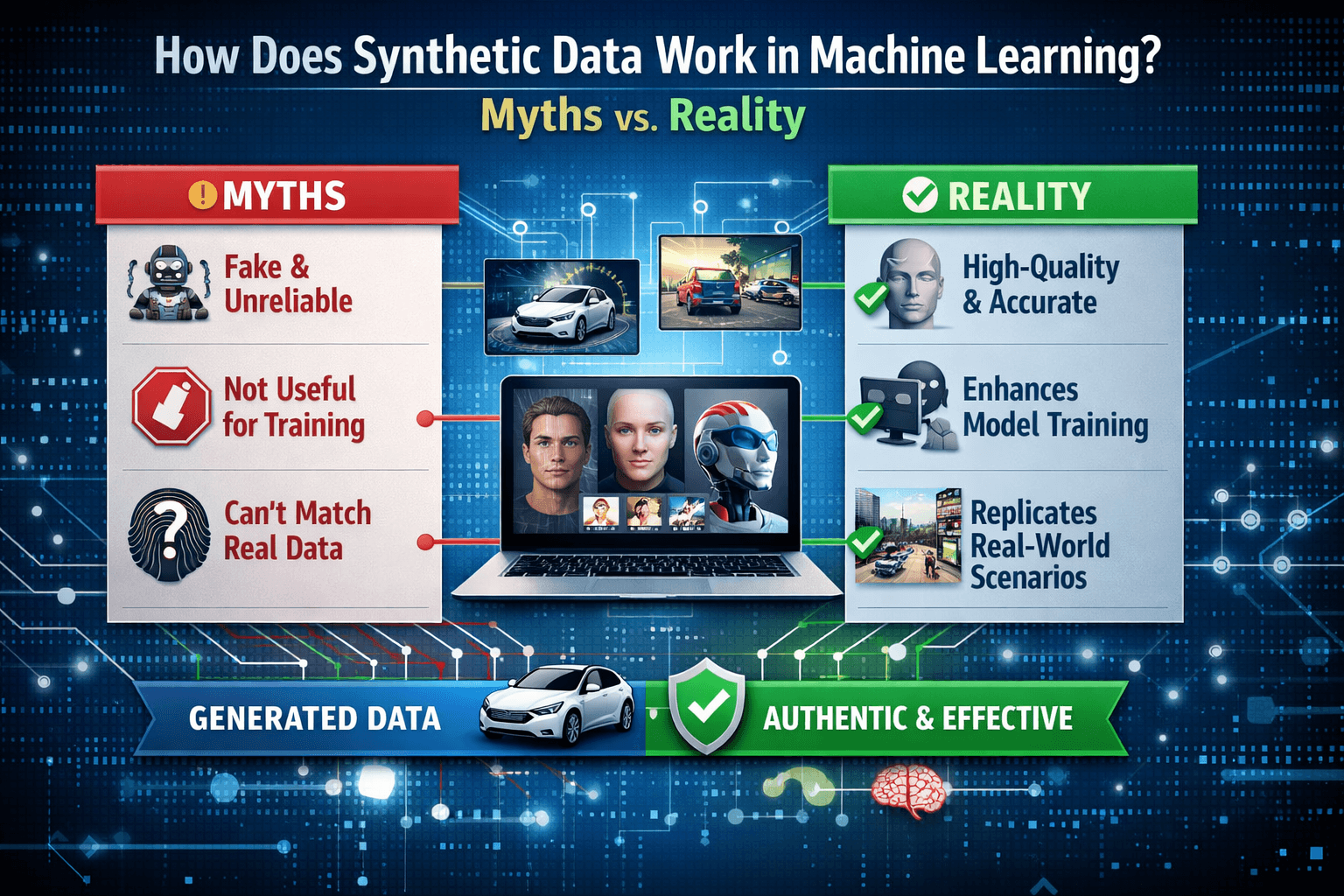
Clarifies misconceptions about synthetic data in machine learning, showing its true value, applications, and how authenticity is maintained.
Understanding Synthetic Data: Cutting Through the Hype
Ever feel lost when people start talking about synthetic data in machine learning? If you’re anyone who uses, manages, or is just curious about modern AI, you’ve probably stumbled on lofty claims and some questionable headlines. Here’s the honest scoop: synthetic data is changing the way we teach machines, but there’s a lot of confusion around how does synthetic data work. Let’s unwrap what’s real and what’s not, so you can confidently be part of this conversation whether you’re a data enthusiast, an engineer, or simply tech-curious.
Why Synthetic Data Actually Matters
Picture this: You want to train a self-driving car, but you can’t put one through every possible road scenario without, well, massive headaches and budgets. Or maybe your healthcare company wants to adopt machine learning but cannot share sensitive patient info. Enter synthetic data: artificially created data that simulates real-world information without the risk, scale, or privacy drama.
On both a practical and ethical level, synthetic data matters because it’s freeing us from huge bottlenecks. Traditionally, collecting, labeling, and storing real data has been expensive, time-consuming, and sometimes downright impossible. Think of all the photos, sounds, or records you’d need some of which might never exist in the wild. So, for many teams, synthetic data means breakthroughs they couldn’t imagine before.
How Does Synthetic Data Work?
Let’s get right into the heart of it. How does synthetic data work, after all? In simple terms, it’s data generated by computers, designed to look just like the real thing, but created with context and rules you specify. The foundation usually involves algorithms a lot of them. Here’s how it typically plays out:
- A model learns the patterns in your real data (if available) or uses defined parameters.
- Algorithms (like GANs Generative Adversarial Networks, or simulation software) then produce new data entries that mimic those patterns.
- The result: fully synthetic datasets in images, texts, numbers, or even videos, tailored for your machine learning projects.
The goal? That the machine learning models can’t distinguish synthetic from real. And, the stronger the resemblance, the better they train.
Common Myths vs. Reality: Separating Fact from Fiction
Synthetic data is sometimes viewed with suspicion and it’s easy to see why. The phrase “artificial data” doesn’t exactly invite trust. Here are a few common myths, debunked:
- Myth 1: Synthetic data is always fake and unusable. In reality, the best synthetic data looks and behaves just like authentic data with key privacy benefits built in.
- Myth 2: It can’t capture edge cases. Quite the opposite! Since you control how data is generated, you can specifically create rare scenarios or “what-if” situations that would be almost impossible (or unethical) to collect in the real world.
- Myth 3: It replaces real data. Actually, synthetic data usually augments real data. It helps when you have small or imbalanced datasets, not as a one-size-fits-all replacement.
Where Synthetic Data Shines: Real-World Applications
Curious about where synthetic data proves itself? Here are a few areas where its value is front and center:
- Training computer vision models: From autonomous vehicles spotting traffic lights to medical imaging for rare diseases, synthetic data fills gaps where real images are scarce.
- Avoiding privacy risks: Particularly in finance and healthcare, synthetic versions allow teams to collaborate without exposing personal data.
- Testing software at scale: Developers use synthetic logs or records to stress-test systems, triggering rare errors without risking actual user info.
Maintaining Authenticity: How Not to Lose “What’s Real”
The pushback is real: if “how does synthetic data work” starts with a computer, can you truly trust the results? Reliable synthetic data doesn’t just look plausible on the surface it’s statistically similar to the data you originally had in mind. And the process isn’t random:
- The tools are rigorously tested to ensure patterns, correlations, and meaningful relationships hold up.
- Validation steps compare real and synthetic datasets side by side—often using trusted evaluation metrics from the field, like FID (Fréchet Inception Distance) for images or privacy reports for sensitive information.
In leading practice, transparency is key: teams document how data is generated, share model choices, and check routinely for bias or errors.
Getting Started: Practical Tips for Using Synthetic Data
If you’re interested in giving synthetic data a try or want to know if it’s the right fit for your project start practical:
- Identify your goal: Are you filling a gap, protecting privacy, or amplifying limited data? Each objective will shape your tools and approach.
- Choose your generator wisely: Look for platforms or open-source tools that fit your data type (images vs. text vs. tabular data) and provide transparency on how synthetic records are built.
Remember, you can often blend synthetic and real data for the best results. Always evaluate model accuracy to make sure you’re not introducing errors or losing valuable nuances.
Conclusion: The True Value of Synthetic Data in Machine Learning
So, how does synthetic data work? At its core, synthetic data gives you flexibility, safety, and power to push machine learning further without running into legal, ethical, or practical barriers. It isn’t a silver bullet, but with proper understanding, it can make the impossible possible for projects big and small.
If you’re curious to try it out, start small. Find one area that’s data-starved, and explore synthetic solutions. You might be surprised by how much farther your machine learning models can go with fewer headaches and much more confidence.
Ready to see synthetic data in action, or have questions about integrating it into your everyday workflow? Stay tuned for more guides, or reach out to share your experience and let’s learn together.